The Centre for Response-Based Practice provides socially just, effective responses to violence, oppression, and adversity. We are a “for-dignity” organization, standing for the equal dignity of people, communities, lands, and waters
Our Story
We have been working alongside one another for more than 20 years in the ongoing development of Response-Based ideas. In doing this, we have joined with many, many others who have contributed their time and knowledge to this work. All 3 of us all come from working-class backgrounds and the early part of our careers were spent as youth workers. We all studied systemic family therapy and then worked for many years as family therapists. Our attention to interaction, language, social justice and dignity have been key similarities that contributed to the evolution of ideas and philosophy in the development of Response-Based practice.
Above all else, we enjoy a wonderful friendship with one another and have lots of fun working together.
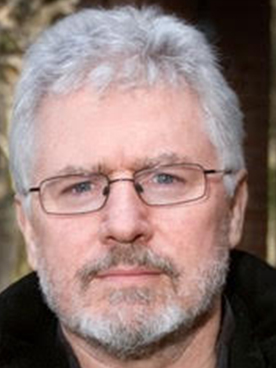
Allan Wade Ph.D. lives on the unceded lands of the Quw’utsun Indigenous First Nation on southern Vancouver Island, Canada. He works as a family therapist, independent scholar, and consultant with a primary interest in promoting socially just responses to violence, broadly defined. For many years Allan has been interested in how adults and children respond to and resist violence and other forms of humiliation, in the connection between violence and language, and in the responses provided by public institutions in the colonial context, where violence and injustice are at issue.
Allan is best known for his part in developing Response-Based Practice, a method of individual and family therapy and community development, a framework for research and analysis, and a guide for practice across the institutions that respond to violence (i.e., child protection, policing, criminal justice, family law, medicine/psychiatry, journalism, research, therapy, and shelter/refuge work).
Allan has worked with adults and children, with people who have been subjected to violence and people who have committed violence. He has also worked as a university instructor in psychology, social work, and counsellor training. Allan provides training and consultation to organizations in Canada and abroad and has published several articles and book chapters on research and practice. In December, 2024, the Governor General of Canada appointed Allan a Member of the Order of Canada (C.M.).
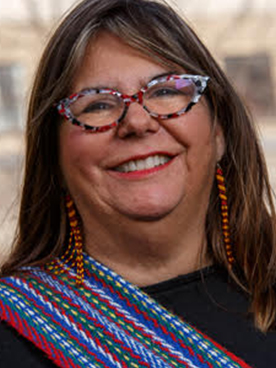
Cathy Richardson Kineweskwêw is a Métis therapist, researcher and academic working at Concordia University in Montreal. There, she is a full professor jointly appointed between First Peoples Studies and Creative Arts Therapies. Her maternal family comes from Fort Chipewyan, with ties to Red River. Cathy holds a Concordia Research Chair in Indigenous Healing Knowledges. She is the Assistant Co-Director of the Centre for Oral History and Digital Storytelling and a co-founder of the Centre for Response-Based Practice. Cathy is interested in research and practice at the intersections of violence recovery focusing on Indigenous, response-based, and dignity-centered practices. She explores various approaches to well- being through her writing and on her substack podcast, where she publishes conversations and speaks with healers, activists and response-based therapists. She is a student of shamanic practice and the mother of three amazing adult children.
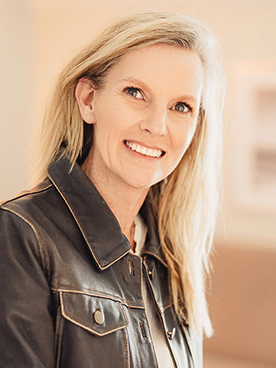
Shelly Dean gratefully lives on the traditional unceded ancestral lands of the Secwépemc Nation, known as Kamloops, BC, Canada. Shelly is a wife, a mother and a grandmother. She grew up in Northern British Columbia, in the small community of Moberly Lake and later in Kamloops, British Columbia. Shelly is a family therapist, clinical supervisor and educator who works with organizations and communities to address issues of violence. She works closely with her colleagues through the Centre for Response-Based Practice, developing and practicing a specialized approach to violence and other forms of adversity, with a special interest in working for children who have experienced domestic and institutionalized violence. Her research has focused on children’s responses and resistance to violence--specifically understanding their behaviour in context, the nature of social interactions with young people, the connection between violence and mutualizing language, and the social responses that children and their families receive. We have found that when young people begin to acknowledge their own history of responses to, and resistance against violence, the conversation naturally shifts to their capacities and knowledge rather than focusing on deficiencies and leading to interventions. Shelly has also taught in the Master of Counselling programs through City University of Seattle and the Master of Education program at Thompson Rivers University.
The Centre for Response-Based Practice
The Centre for Response-Based Practice is dedicated to developing and advancing socially just responses to violence, grounded in dignity, accountability, and accurate language.
THE BEGINNING
1980
Early 1980s — The Early Ideas
In the early-1980’s several colleagues in Duncan, B.C., formed a discussion group with the encouragement of psychiatrist Robin Routledge, who introduced us to Milan systemic family therapy. This group, first named “Nemo” and then the Orcas Society, became registered as a non-profit society in B.C. Orcas members organized training events with leaders in the brief and ecosystemic therapies; Luigi Boscolo, Gianfranco Cecchin, Lynn Hoffman, Imelda McCarthy, Nollaig Byrne, Michael White, Alan Jenkins, Bonnie Burstow, Steve de Shazer, Insoo Kim Berg and others.
The development of Response-Based Practice
Allan Wade joined the PhD program in Psychology at the University of Victoria, co-authored by Dr. Janet Bavales, contributing to the Pragmatics of Human Communication and systemic thinking. His work focused on the distinction between mutual and unilateral interactions, the analysis of violence, resistance, and institutional responses.
1992
1994
The Colonial Code
Allan Wade and Nick Todd wrote a paper titled Domination, Deficiency and Psychotherapy (1994), which examined how theory-method-discourse dynamics can obscure violence and reproduce oppression. This work introduced what they called “parallel objectifying practices.”
Liard Aboriginal Women’s Society (LAWS): 1990’s onward
Over time, the Centre engaged in many conversations with Kaska people about their experiences and resistance to diverse forms of colonial violence. These accounts highlighted how institutions suppress and obscure Indigenous responses and resistance. This work informed successful collaborations across multiple systems, including justice, child protection, policing, education, medicine, psychiatry, and psychology—revealing how colonial violence is often concealed within professional practices.
THE CENTRE OPENS
1995
1995–Present — The Framework
Through direct practice with adults and children responding to violence, Response-Based Practice was shaped not by theory alone, but by the accounts of service users themselves. Survivors consistently described how they resisted violence, even when those responses were overlooked or minimized by institutions. These insights became foundational to the framework.
Naming the Work: Response-Based Practice
The term “Response-Based Practice” reflects a set of core tenets and a practice framework for use in therapy and supervision. It represents a particular stance: relational, social, and contextual, while resisting claims of universal applicability or neutrality.
THE PRACTICE TAKES SHAPE
2000
Dr. Cathy Richardson
Dr. Cathy Richardson joined the Centre for Response-Based Practice. Her background as a Métis youth worker, family therapist, and health practitioner contributed to the Centre’s focus on collaborative responses to violence and the importance of dignity, expressed as “The Queen of Dignity.”
Dr. Shelly Dean
Dr. Shelly Dean joined the Centre in 2006. With a background in the non-profit sector, youth work, and training in Milan Systemic Family Therapy, her work focused on institutional violence and children’s responses and resistance to violence.
2006
2016
Opening Response-Based Practice Kamloops Office
In 2016, Dr. Shelly Dean opened a direct service office in Kamloops, British Columbia, operating exclusively from a Response-Based Practice framework. In 2025 it became known as “The Centre for Dignity: Kamloops” and hosts more than 10 therapists.
Order of Canada
Dr. Allan Wade, C.M., was appointed a Member of the Order of Canada, one of the country’s highest civilian honours, in recognition of his work developing Response-Based Practice as a specialized approach to addressing violence.
2024

Deepen Your Understanding of Response‑Based Practice
Our mission is to shift how violence and resistance are understood and responded to — in practice, language, and institutions. If this approach aligns with your values, explore our training opportunities and deepen your practice.